
The film, the comic, goth, and the strange afterlife of Eric Draven
I have been trying to write about The Crow for years, mostly because it refuses to stay in one lane. It is a comic, a film, a soundtrack, a real-world tragedy, and a permanent subcultural marker. It is incredibly difficult to write about without either over-romanticizing the melodrama or reducing the whole thing to black leather and face paint.
I didn’t read the comic first. In the spring of 1994, I was nineteen, barely making ends meet, and living in a depressing part of Florida. My apartment had a small black-and-white TV, and entertainment money was nonexistent. But the trailer for The Crow grabbed me immediately.
There was something about the image of Brandon Lee as Eric Draven that cut through the noise of mid-90s media. The black leather duster, the stark white face paint, and the sharp lines carved across his eyes and mouth made him look like a ghost, a rock star, and an avenging angel all at once. This wasn’t clean, sanitized comic-book heroism. It looked darker, sadder, and more dangerous. Even though money was tight, I made sure I saw it opening weekend.
At nineteen, I was mostly responding to the surface: the mood, the rain, the music, and the raw catharsis of the revenge fantasy. The idea of someone clawing their way out of the grave because love and pain were too loud to let them sleep is inherently melodramatic. But The Crow has never been afraid of melodrama, which is exactly why it works.
What has changed for me over the decades is how I understand what I was actually looking at.
Not Goth Because of the Makeup
Let’s clear up a persistent point of friction: The Crow is not goth simply because Eric Draven wears black and walks through a rain-slicked city.
Goth is, first and foremost, a music-based subculture defined by clubs, records, bands, and local scenes. It is built on the sounds of Bauhaus, Siouxsie and the Banshees, and The Sisters of Mercy. It is a living community driven by DJs, fashion experiments, and late-night arguments over genre boundaries. Goth did not begin in 1994, and it cannot be reduced to one character in corpse paint.
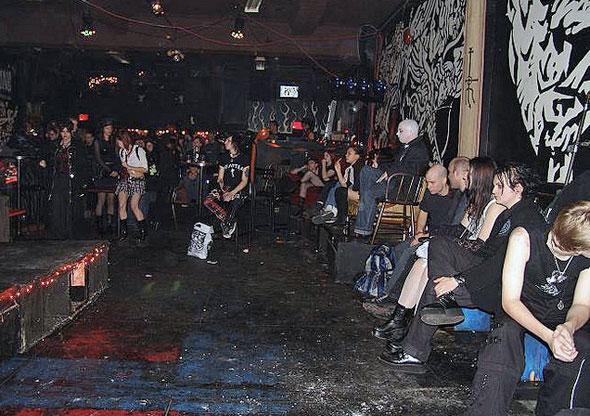
So no, The Crow is not “goth” by strict definition. But pretending it has nothing to do with the subculture is just as incorrect.
The connection isn’t one of ownership, it’s one of resonance. The Crow understood enough of goth’s musical, emotional, and visual language that goths recognized something familiar in it. It touched on themes the subculture had been exploring for over a decade: theatrical self-presentation, romance pushed past the grave, and the act of taking the things that make you feel isolated and turning them into armor.
Grief in Ink and Audio
To understand why that resonance exists, you have to go back to James O’Barr’s original comic pages. It didn’t move like a traditional narrative, it felt like a stack of records, torn photographs, and lyric fragments.
O’Barr channeled his own intense, real-world grief into the book after losing his fiancée to a drunk driver, filtering his loss directly through post-punk and gothic rock. Music wasn’t background decoration in the comic, it was the actual architecture. O’Barr injected lyrics from Joy Division and The Cure straight into the panels, with characters quoting “Atrocity Exhibition” and “The Hanging Garden.”
Eric Draven’s design on the page was heavily informed by underground music iconography. His gaunt, spectral look drew from Bauhaus frontman Peter Murphy, his erratic physicality was modeled after Iggy Pop, and Robert Smith’s signature smeared lipstick hovered over the broader mood. Eric looked like a ghost pulled straight from a post-punk record collection. That was entirely intentional.
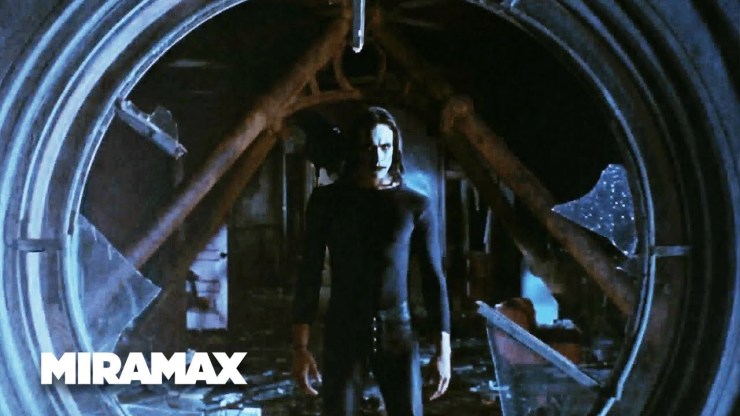
When Alex Proyas adapted the book for the 1994 film, he preserved that musical spine but translated it for a new decade. The soundtrack became an absolute monster of alternative culture, bridging the gaps between industrial, metal, goth, and punk.
The inclusion of The Cure’s “Burn,” written specifically for the movie, functioned as an invocation for the entire story. Having Nine Inch Nails cover Joy Division’s “Dead Souls” explicitly linked the post-punk grief of the late 1970s to the aggressive industrial intensity of the 1990s. For an entire generation of misfits, The Crow was something you listened to just as much as something you watched.
Beyond the Club: Fandom and Shorthand
Because the movie hit at a moment when dark alternative culture was leaking into the mainstream, it quickly spilled out of underground music clubs and into broader pop culture.
A few weeks after seeing the film in Florida, I packed up and moved to Atlanta, Georgia, giving me regular access to DragonCon. Back in the mid-90s, the art of cosplay was just called costuming, and it was a far more niche, self-contained hobby within fandom compared to our modern era. DragonCon was already a massive gathering, but the percentage of attendees walking around in full costume was still relatively small.
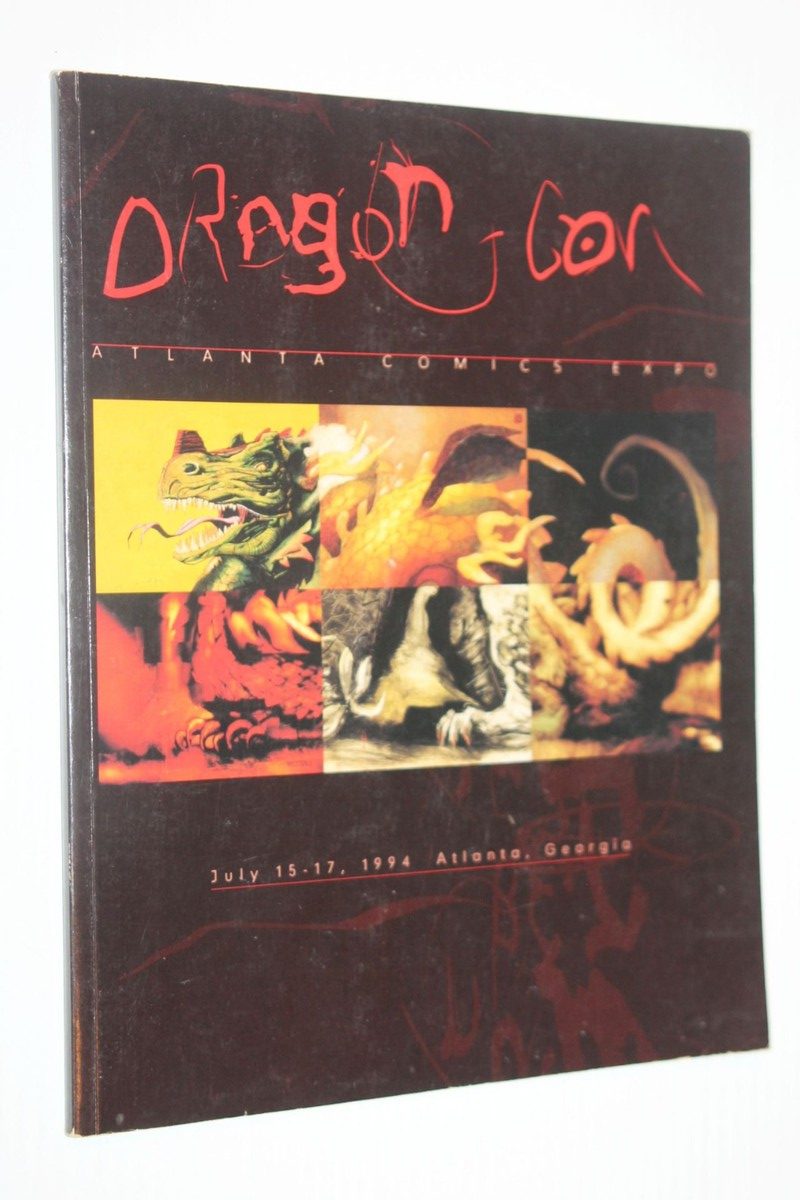
That’s why I was caught completely off guard by the sheer volume of young men walking the halls dressed as Eric Draven that year. On Friday, seeing the first few felt amazing, a nod to a shared, alternative interest. By Sunday afternoon, it felt thoroughly overdone.
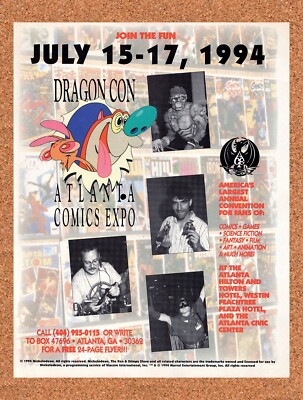
That shift was a microcosm of what happened to The Crow on a cultural level. Because the image was so visually striking, it became an instant shorthand. To some, he was a romantic ideal, to others, a power fantasy. But to the mainstream world, he became the ultimate lazy stereotype for “goth.”
Suddenly, an entire music-driven subculture was flattened into white face paint, black leather, rain, and brooding on a rooftop. Anyone in the scene knew the frustration of watching a complex culture of music, humor, camp, and community get reduced to a single movie still or a Hot Topic rack.
Yet, clichés only form around images powerful enough to be worth repeating. The problem wasn’t that The Crow had nothing to do with goth, the problem was that people mistook one specific reflection for the entire room.
The Thirty-Year Echo
It is impossible to separate The Crow from real-world tragedy. O’Barr’s comic was born from personal loss, and Brandon Lee’s accidental death on set ensured the film would forever be viewed through a lens of mourning.
But there is a sharp difference between acknowledging tragedy and feeding on it. The Crow doesn’t endure simply because terrible things happened around its production. It endures because it offers an emotional catharsis that reality rarely grants. It provides the fantasy that the dead do not completely vanish, that love can refuse to be erased, and that cruelty will eventually be answered.
Now that we are well past the thirtieth anniversary of the film, I find myself questioning whether there is genuinely anything left to add to the conversation. The Crow has been analyzed, packaged, and retrofitted so many times that the ground feels entirely covered.
But then I walk into a goth club, and the DJ drops “Burn” or the “Dead Souls” cover, and the dance floor fills up instantly.
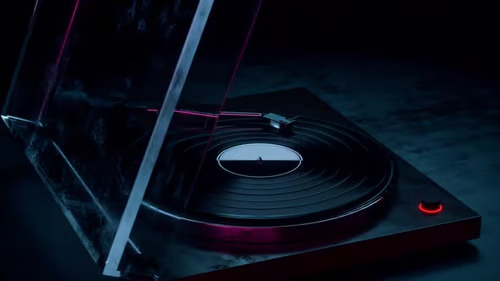
That is when the hesitation fades. The endurance of The Crow isn’t just nostalgia, it is a fascinating cultural anomaly. Most mid-90s action movies don’t leave behind a soundtrack that functions as a permanent liturgy for a living subculture three decades later. The film has outlived its era because the subculture wasn’t just consuming it, we were absorbing it into the ecosystem. For the younger kids on the dance floor who weren’t even alive in 1994, the music still hits with the same atmospheric weight. For those of us who remember opening weekend, it is a direct line back to a nineteen-year-old self sitting in front of a black-and-white television in Florida.
The Crow didn’t invent goth, and it doesn’t define it. But it remains a brilliant, rain-slicked intersection where music, comic art, cinematic style, and genuine human grief collided for one brief moment in 1994.
Maybe that is why the ghost keeps lingering. Not because it belongs to one specific subculture alone, but because it sits perfectly at the exact point where memory and melody overlap. That is where The Crow has always lived for me, and why, even after all the copies and the clichés, the original image still holds its ground.
Where does The Crow live in your own memory? Do you remember catching it on opening weekend in 1994, or did you discover it years later through a late-night club set or a battered soundtrack CD? Drop your thoughts, memories, and favorite tracks in the comments below—let’s talk about why the ghost still lingers.
Film Credit
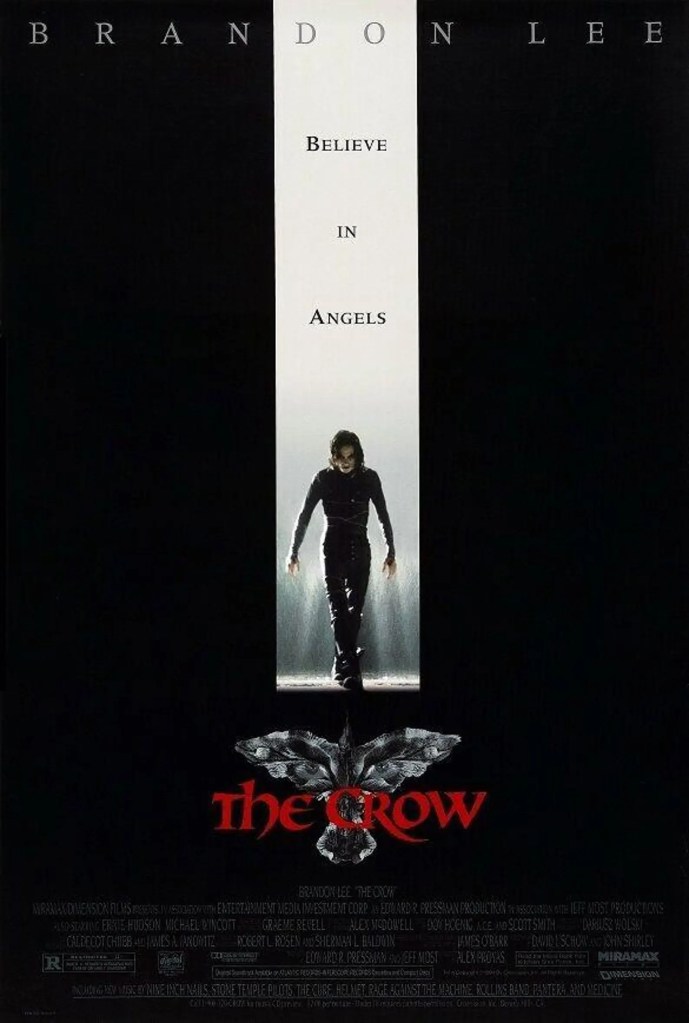
The Crow (1994)
Directed by: Alex Proyas
Written by: David J. Schow, John Shirley (Screenplay), James O’Barr (Comic Book)
Produced by: Edward R. Pressman, Jeff Most
Cinematography: Dariusz Wolski
Music by: Graeme Revell (Score), Various Artists (Soundtrack)
Production Companies: Dimension Films, Edward R. Pressman Film Corporation, Miramax
Starring: Brandon Lee, Ernie Hudson, Michael Wincott, Bai Ling, Sofia Shinas, Rochelle Davis
 thetwilighttone.com