
Scissors and Shadows: Growing Up Goth with Edward Scissorhands

The first time I saw Edward Scissorhands, I felt like someone had finally made a movie about me—or at least the version of me I didn’t yet have the words for. I was a teenager, outspokenly weird, wearing too many nerdy things and not enough armor for the world. I didn’t fit in at school with any specific crowd, always being either too much for my fellow nerds or not enough for the alterna-teens, and it still stings when I think about how it felt back then. Watching Edward, a pale, soft-spoken boy with shears for hands, wander through a pastel suburb that couldn’t understand him, I saw some of myself reflected in his scars. Ironically, those suburbs were filmed about two hours north of where I lived, and the neighborhood was eerily similar to my own in Florida.

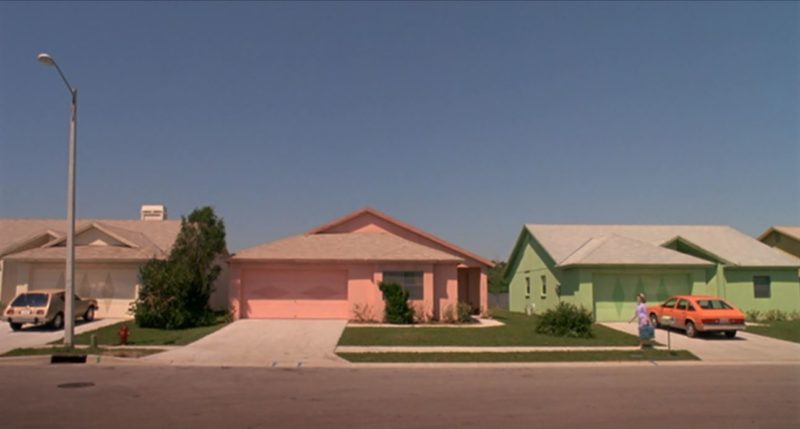
For many of us, Edward Scissorhands was a mirror, a lifeline, and an awakening. It shaped the way I understood identity, beauty, love, and what it meant to be different. It became one of those rare pieces of art that speaks to the heart of the outcast, and its influence continues to ripple through cinema and goth subculture decades later.
The Outcast’s Fairy Tale
Edward’s story is the ultimate outsider fantasy. Created by the late, great Vincent Price, his final film role, Edward was unfinished and cast into a world that alternately fetishizes and fears him. His experience felt eerily close to my own. In high school, being “different” wasn’t something romantic. It was something dangerous. You became a target. Like Edward, I wanted to connect with others, to express myself. But more often than not, I ended up hiding behind metaphorical scissors, afraid that being too close would hurt someone, or get me hurt. Kids can be brutal.
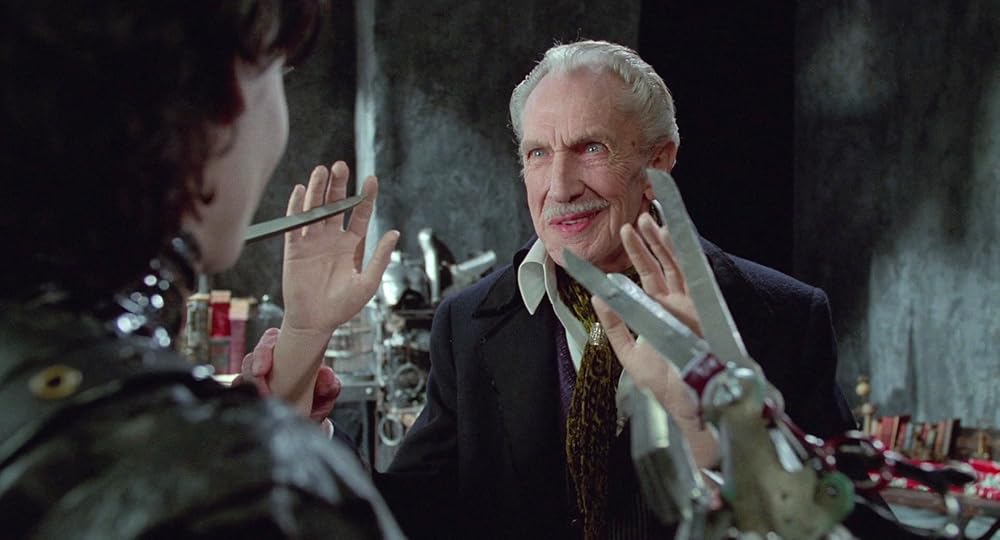
His relationship with Kim (played by a very blonde Winona Ryder) felt like the ghost of a dream I didn’t know I had. The kind of love where someone sees through the strangeness and finds something beautiful. But even that wasn’t a fairytale ending, it was a bittersweet reminder that sometimes, people like us are meant to be admired from afar, never fully held.

The Aesthetic Awakening
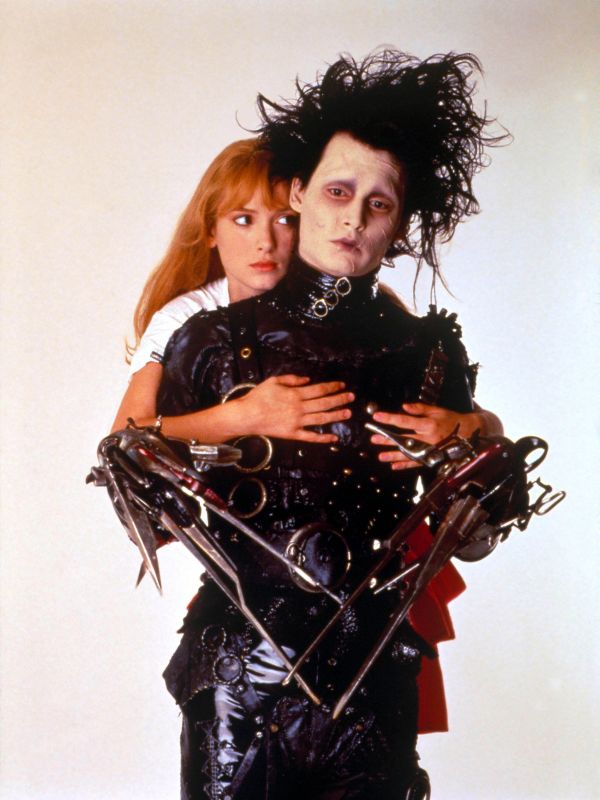
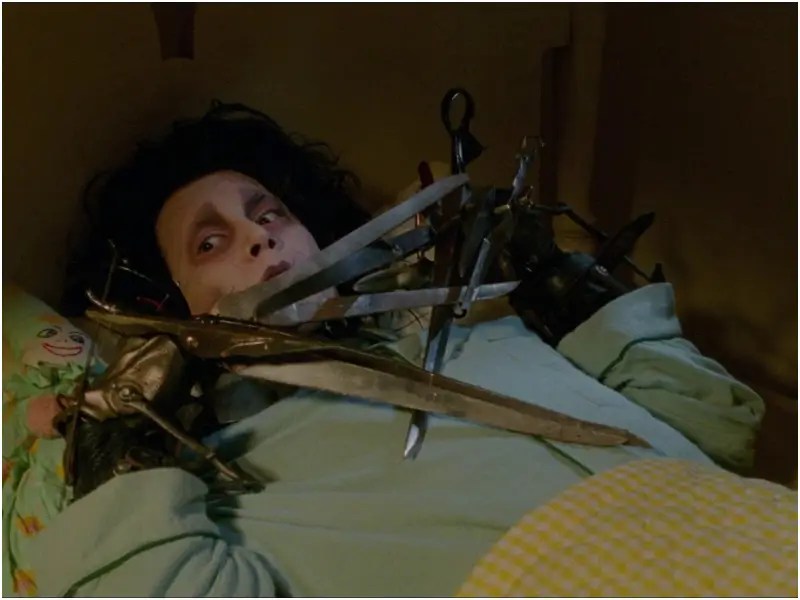
Visually, Edward Scissorhands was a revelation. The contrast between Edward’s black leather, wild hair, and pale skin against the sun-drenched suburbia was more than just a style choice, it was a mood, a manifesto. It showed me that darkness could be beautiful, soft, and vulnerable. That you could dress in black and still feel everything too much.

That imagery burrowed deep into my subconscious. It wasn’t long after seeing it that I started experimenting with more dramatic fashion: black hair dye, patent leather shoes, and medieval jewelry. I wasn’t just dressing differently; I was creating armor, turning my softness into something visible, even if it made others uncomfortable. Admittedly, it was a slow process, but progress doesn’t happen overnight for all of us.
A Legacy in Film
Edward Scissorhands changed the landscape of cinema in ways that are still felt today. It was a gothic romance that reimagined the classic Frankenstein narrative, not as horror, but as poetic tragedy. The film gave us a new kind of hero: vulnerable, misunderstood, artistic, and alien.


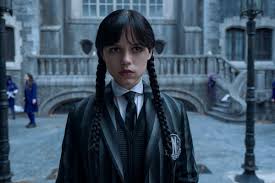
It also cemented Tim Burton’s signature style – macabre but whimsical, eerie but tender. His work paved the way for a whole generation of films that treated outsiders not as villains, but as protagonists. You can trace Edward’s lineage in characters like Lydia Deetz in Beetlejuice, Sally in The Nightmare Before Christmas, and even more recent icons like Wednesday Addams in Netflix’s reboot.

Burton, often paired with composer Danny Elfman, created an atmosphere that resonated with a generation of dreamers who didn’t belong in the mainstream. The soundtrack alone, achingly beautiful and haunting, could make your heart feel like it was drifting in snow.
A Cornerstone of Goth Subculture
It’s no surprise that Edward Scissorhands became a touchstone in the goth community. His look is iconic: asymmetrical leather, ghostly makeup, scars worn like symbols of survival, Robert Smith–inspired hair. For many goths, Edward is more than a character, he’s an archetype. The gentle monster. The beautiful freak.

But the film’s goth legacy goes beyond fashion. It captures the emotional core of the subculture: loneliness, yearning, beauty in decay. The movie gave space to feel sadness without shame, to be romantic without irony, to be strange without explanation.
From club nights where the film is projected as background visuals beneath the haze of fog machines, to cosplayers recreating Edward’s look in loving detail, the film’s influence endures. It didn’t just inspire a style, it reflected a soul.
A Lasting Impact
As an adult, I still return to Edward Scissorhands thirty-five years on when I need to remember who I am. It reminds me that softness isn’t weakness, that difference isn’t failure, and that there is beauty in not belonging. It taught me that art can be your voice when words fail, and that sometimes, the best kind of love is the kind that lets you stay strange.
Edward Scissorhands didn’t just speak to the teenager I was; it gave me permission to become the person I am today. It carved out a place for me in cinema, in subculture, and most importantly, in my own story.
What did Edward Scissorhands mean to you growing up? Drop your thoughts in the comments. I love hearing how these films shaped other weird kids like me.

🔎 Media Credits & Film Info
Title: Edward Scissorhands (1990)
Director: Tim Burton
Cast: Johnny Depp, Winona Ryder, Dianne Wiest, Anthony Michael Hall, Vincent Price
Studio: 20th Century Fox
Genre: Gothic Fantasy, Romance
📷 Image Sources:
All images are used under fair use for editorial purposes.
© 20th Century Fox / Tim Burton Productions.
Behind-the-scenes photography sourced from official press kits and public archives.
 thetwilighttone.com
One of my favorite quotes is “There is no exquisite beauty… without some strangeness in the proportion” by Edgar Allan Poe. That line has always resonated with me. Movies like Edward Scissorhands, writers like Oscar Wilde, musicians like Robert Smith, and others in this genre remind me that being different isn’t a flaw. We need to embrace what sets us apart. Life is far too short to settle for a mundane existence.
Empira
The Vamp Empire
LikeLike