
An invitation to rethink visibility, expression, and what it means to show up in goth spaces today.
There’s a subtlety to it at first, until you start paying attention. At many dark alternative events now, there’s a clear contrast. Femme-presenting people show up with intention, with expression, with a sense of play in their clothing and styling, while a lot of masc-presenting people don’t. It’s not that they don’t belong in these spaces. It’s that, visually, they seem to disappear into the background.
I started noticing this shift back in the mid-2000s. To be fair, I’ve been part of it too. There were plenty of nights where I leaned into what’s often called “corporate goth,” a black button-down and a blazer shaped by the realities of a day job that didn’t always allow a more extreme look to carry over into nightlife. I still tried to put some effort into how I looked, but even then it felt like something was already starting to flatten out, and I couldn’t quite name it yet.
Goth has always been, at its core, a music-based subculture. That hasn’t changed. It was never visually passive. From early club nights to the height of music video culture, how people showed up through clothing, styling, and aesthetic was part of the experience. Not a requirement, but a form of participation. You didn’t have to look a certain way to belong, but showing up with intention has always been part of what made these spaces feel alive.
What we’re dealing with now is something more complicated than that.
Over the last few years, especially during the pandemic, alternative fashion got pulled into the algorithm in a way it hadn’t been before. People were home, scrolling more, buying more, experimenting more, and platforms like TikTok and Instagram began rewarding highly visual, easily recognizable aesthetics. “Alt” became something you could put on, film, and package in under a minute.
That visibility isn’t inherently a bad thing. In some ways, it brought back a kind of peacocking, with people experimenting, dressing up, and pushing their look further than they might have otherwise. At the same time, it flattened things. What used to be tied to music, community, and lived experience started getting reduced to a style, something you could buy, replicate, and perform without ever stepping into a club.
The impact hasn’t been evenly distributed. The version of “alt” that gets amplified tends to follow a very specific visual language, one that leans heavily femme, expressive, and immediately eye-catching. That becomes the default image of what the scene looks like. When that’s the version constantly being reflected back, it leaves less space for other expressions, especially masc-presenting or more understated looks, to feel visible or even valid.
Step into a room and the difference becomes obvious. At a glance, it’s not hard to spot who’s engaging with that visual language and who isn’t. Femme-presenting people are still pushing it, playing with silhouettes, textures, makeup, layering, all the things that make goth feel expressive and alive. Meanwhile, a lot of masc-presenting people default to something safer. Jeans. A band shirt. Maybe a jacket. Functional, familiar, and easy to disappear into.
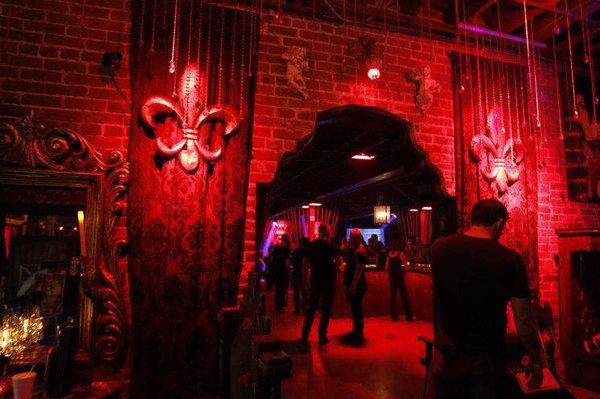
This isn’t about perfection, money, or who can put together the most elaborate look. It’s about intention. It’s about showing up to a space that’s always been rooted in expression and choosing whether or not to engage with that part of it.
The problem is that there isn’t a clear lane for masc-presenting expression anymore. I’ve been told I was too polished. That I didn’t have the right hairstyle, the right color, the black nails, the right look. Basically, not goth enough, because I wasn’t hitting someone else’s checklist.
So which is it? Too little effort, or the wrong kind?
That contradiction doesn’t invite experimentation. If anything, it encourages people to play it safe. When enough people do that, the room changes.
There’s also a broader cultural pressure at play. Outside of the scene, a very specific version of masculinity is constantly being pushed, one that values rigidity, dominance, and a narrow definition of what’s acceptable. Step outside of that, and the labels come quickly. Weak. Soft. Not serious. It’s not hard to see how that kind of pressure bleeds into spaces like this, where experimenting with appearance can feel like a risk instead of an opportunity.
Part of that shift comes down to visibility.
There was a time when masc-presenting figures in the scene weren’t hard to find. You had people like Dave Vanian of The Damned, sharp, vampiric, theatrical without losing presence. Daniel Ash of Bauhaus brought something looser, more sensual, less rigid. Outside of bands, you had figures like Propaganda magazine’s John Koviak, men presented as stylish, deliberate, and visually compelling in ways that didn’t feel like a joke or a costume.
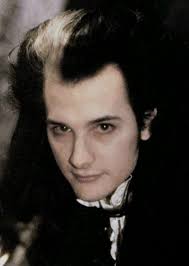
Credit: Dave Vanian, The Damned
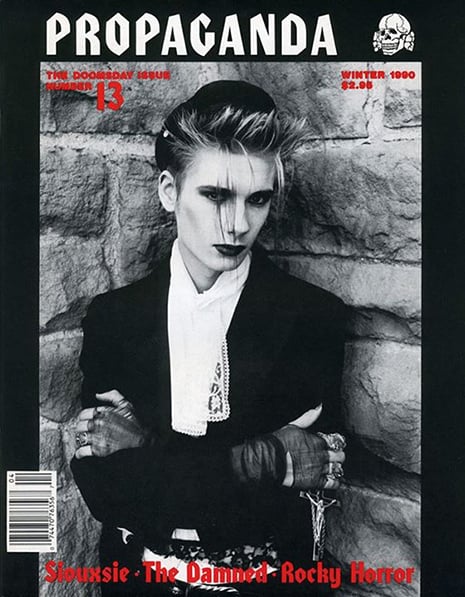
Credit: Propaganda Magazine / John Koviak
Adjacent scenes carried that energy too. Electro-industrial acts like Skinny Puppy brought a blackened, aggressive, urban decay aesthetic, stylized with a full DIY attitude in both hair and clothing. Artists like Chris Pohl of Blutengel leaned into a distinct visual identity, something recognizable, something intentional. Not strictly goth, but part of the broader dark scene orbit where synthpop and futurepop intersect with goth-adjacent aesthetics.
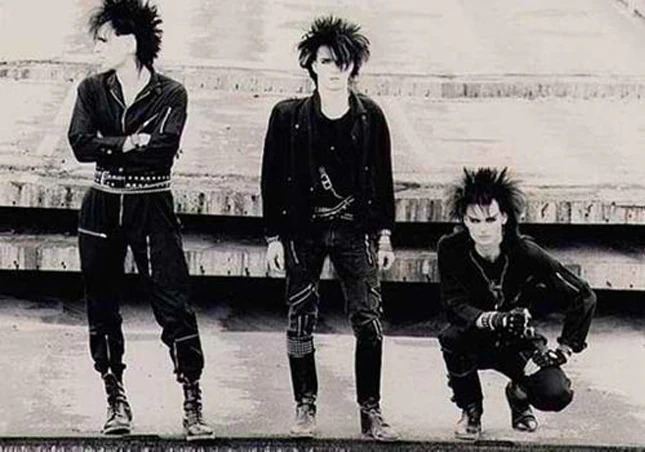
Those reference points mattered. They gave people something to look at and think, I could try something like that.
Now, it’s harder to name those figures. Not because they don’t exist, but because they’re not being amplified in the same way. The dominant visual language has shifted. What rises to the surface leans heavily in one direction, the hyper-visible, hyper-curated, often hyper-sexualized “goth mommy” archetype.
When that becomes the most recognizable version of the scene, everything else starts to fade around it.
So where does that leave us?
If the references aren’t as visible as they used to be, waiting for new ones isn’t the answer. Building that presence again, one person at a time, might be. It doesn’t have to be perfect or all at once. Just do it intentionally.
That’s not always easy. Thrifting for masc-presenting looks can feel like a dead end. DIY gets talked about a lot, but not everyone has the skills, time, or starting pieces. When I was coming up in the 90s, it was a different kind of trial and error. Dyed black hair, eyeliner, clunky patent leather shoes, Vampire: The Masquerade t-shirts, whatever I could find that felt even remotely connected to the scene. Jewelry, odd pieces from alternative shops, anything that worked. It wasn’t polished, but it was a start.
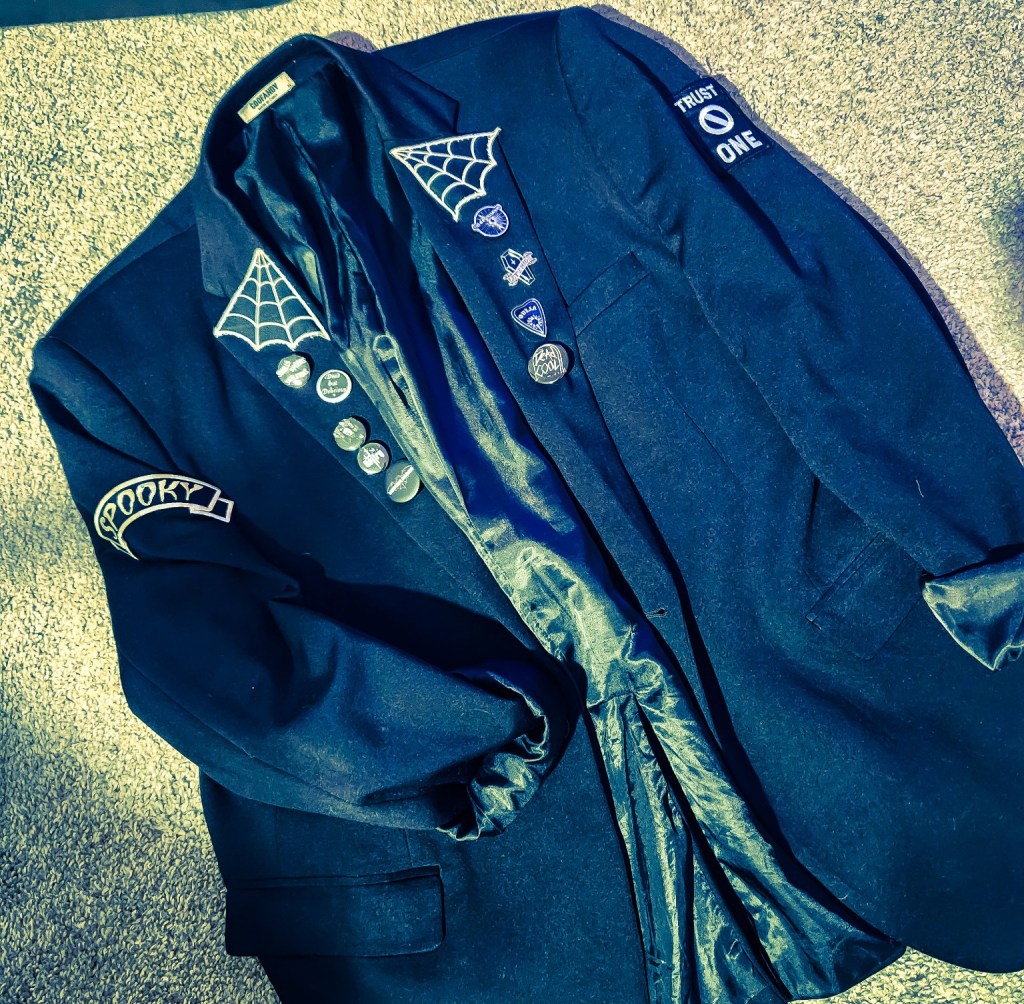
That instinct never really goes away. Years later, I picked up a basic black blazer and built on it, patches, pins, a few spikes. Some glued, some safety-pinned, none of it perfect. But it was mine. I experimented with makeup too, sometimes looking like a deranged clown until I figured out what worked for me.
Sometimes that means buying something off the rack. Brands like Punk Rave or Devil Fashion can be a starting point. Not the end goal. Just a base to work from, mix with, and make your own. Supporting smaller artists and creators is always worth prioritizing, but sometimes certain pieces just call out, and there’s nothing wrong with that if it helps you achieve the look you want.
Showing up doesn’t mean full regalia every time. It doesn’t mean chasing a standard or trying to outdo anyone else. It can start small. One modified piece. One detail you normally wouldn’t bother with. Something slightly outside your comfort zone that still feels like you.
Because that’s what’s missing. Not masculinity. Not androgyny. Not creativity.
It’s simply permission.
Permission to take up space visually. Permission to experiment. Permission to be seen without fitting a specific mold. The truth is, we don’t need anyone’s permission to express who we are.
Goth has always had room for that. It was built on it.
So if you’re showing up to these spaces, don’t just exist in them. Engage with them. Take your time. Try something different. Be a little reckless with it. Find the version of yourself that feels the most alive, or undead, and lean into it.
You don’t need to transform overnight. But you don’t need to disappear either.
I’m curious how others are experiencing this, especially those trying to find their place in it.
 thetwilighttone.com