
The Familiar Argument
Lately, it’s unavoidable to see the social media commentary that many popular science fiction franchises have gone “woke.” Few accusations have been thrown around more than the claim that Star Trek has somehow lost its way. The debate usually follows a familiar script: a new show or character is labeled woke, followed by the inevitable rebuttal that Star Trek has always been that way. What strikes me isn’t how new this argument feels, but how old it actually is. I remember hearing almost the exact same thing in 1988.
Growing Up With Two Treks
My earliest memories of Star Trek can be traced to right before Star Trek: The Motion Picture came out. But it was hard to compete for my attention at that age when Star Wars had just dropped and was all the rage for kids. Cooler toys, big action pieces, and mind-blowing special effects.
Then something changed right around when I turned twelve. I was living in a pretty boring and culturally isolated part of Florida, and my interests were turning more toward science, space, and reading science fiction. Suddenly, those old episodes started resonating with me more, the feature films felt more contemporary for the times, and Star Trek: The Next Generation made its debut.
I was fortunate enough to discover that a local Star Trek club had started up. In hindsight, I’m still amazed my parents allowed me to be involved with the group without them. I attended club outings, Star Trek conventions, and space shuttle launches. I even met celebrities and made so many close friends along the way. And despite them all being adults at the time, I’m still friends with many of these people to this day.
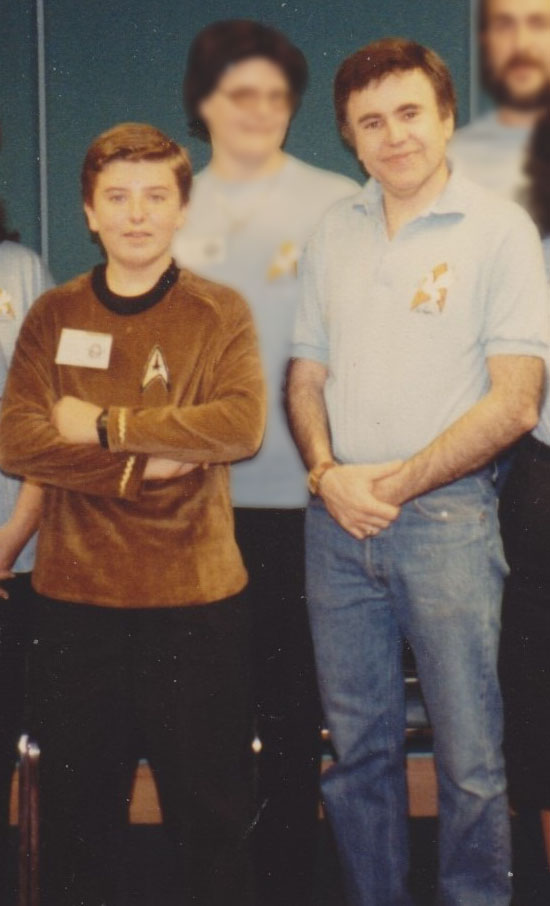
Now, framing that setup, I can vividly recall the fan reaction at the time. The division was noisy, even back in 1988. Which captain was better—Kirk or Picard? And more importantly, why is there a teenaged kid on the bridge involved with solving major intergalactic issues? Many look back fondly at TNG now. But in its day, they were quick to proclaim that this wasn’t real Trek.
The First Disconnect: When Trek Lost Me
Let’s fast forward to the 90s. TNG was coming to a close and prepping for its first theatrical film all at the same time. Paramount was also launching another new Trek show. I have to admit, I had a hard time getting into Deep Space Nine. I knew that it was a near rip-off of another 90s-themed space station show, Babylon 5. Star Trek was about movement, traveling to strange new worlds. This new show required the action and story to come to it, at least initially. I felt betrayed.
By the time Voyager and Enterprise entered the airwaves, I was burned out on the oversaturation of Trek. The diversity of its cast or crew never bothered me. It was always coded in the DNA of the show. It was simple fatigue, and what I still feel was a lack of compelling creative direction.
And that’s what happens sometimes with long-running franchises. Many fans lose interest. They drift. It’s not that they stop completely loving it, but they move on to the next new, shiny thing. Trek always stayed with me. I just didn’t have the passion for it the way I once had.
Returning Through the Reboots
There was another lull in Trek film and television for several years. The studio kind of understood that the franchise needed a serious infusion of something new. The 2009 pseudo-reboot of TOS took what we knew about the 60s TV show and turned it on its head. Saying there wasn’t a vocal segment of the fan community outraged by this would be false. To my own surprise, I was not one of those upset. I enjoyed the film and wanted to see where this all could go.
I think that is where it finally clicked. One of the great things about a franchise like Star Trek is that it can reinvent itself. It can show us a universe of infinite diversity in infinite combinations.
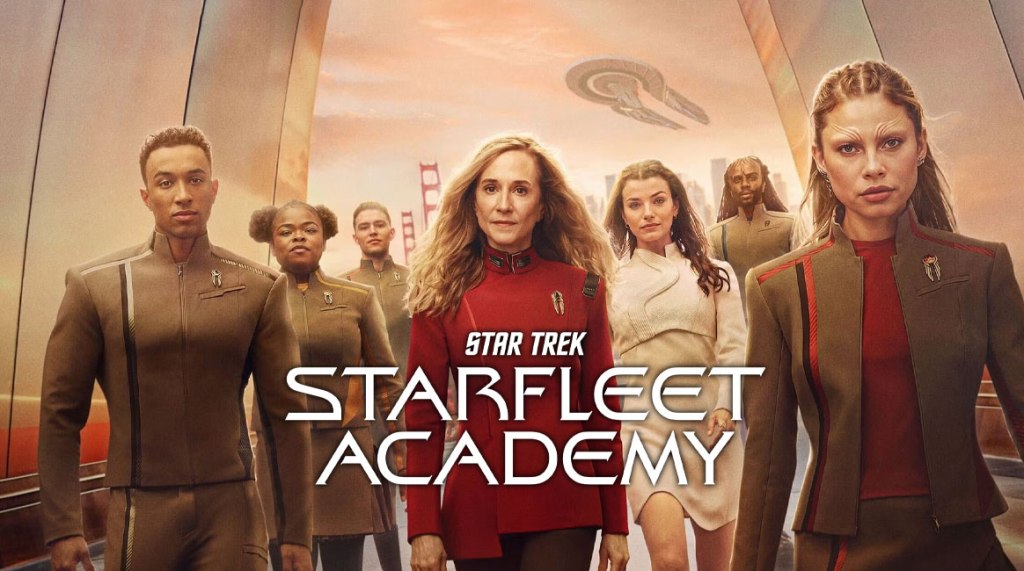
Since those new films, I’ve given new Trek iterations wholehearted attention. Some have worked and some have missed the mark. But I can’t say it’s because of “woke.” I can point to acting style choices and story direction. Discovery had interesting concepts, but fell flat in many areas for me, and I did watch every episode. Lower Decks provided a comical perspective that still honored what came before it. Strange New Worlds brings the franchise back to some of its early 1960s roots. And here we are with the newest show—Starfleet Academy—presenting a younger generation of Star Trek and taking us even further into the future.
Throughout all of these versions, I can genuinely say that the core of what Trek represents still remains. Star Trek has always told stories and presented characters that never felt fully safe for our modern age.
The Myth of the “New” Controversy
In the last several years, there’s been a growing trend in some sectors of the fandom to frame the inclusion portrayed on the show as a new invention and part of “woke” ideology. These voices review-bomb the newer shows and troll heavily on social media. As annoying as it can be, these aren’t new criticisms.
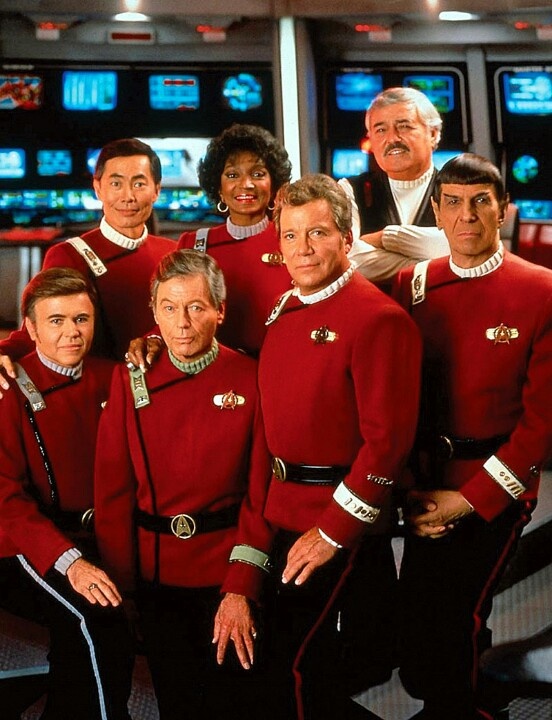
Even dating back to the show’s first appearance in the 1960s, Star Trek was deemed too socially progressive and labeled “liberal.” The crew of the Enterprise included a Black woman, a Russian man, and an Asian man, each serving as an important contributing member. This was especially controversial considering the series aired during the height of the Cold War between the US and the former Soviet Union, and during the Civil Rights movement.
Each era has brought a new version of what some fans viewed as a dilution of “their” Trek. The Next Generation saw criticism for portraying the Federation as a socialist utopia and the Enterprise as a starship full of families and children. Deep Space Nine faced criticism for being too “politically correct,” elevating the Ferengi as main characters, leaning into heavy religious storylines, and even showing a lesbian kiss.
These types of pushback against the franchise can be traced through each iteration right up to today. Replace different minority groups and social issues with whatever is happening now, and you’ll be certain to find a complaint about how Star Trek is choosing to tackle those issues through its characters and storylines.
IDIC vs. The Uniform: The Core Contradiction
Here’s the thing with Star Trek—it has always walked the line between two opposing ideas. The first is that the franchise revolves around Starfleet, a paramilitary organization with rules, structure, uniforms, and hierarchy. The second is the Vulcan philosophy of IDIC, or infinite diversity in infinite combinations. That second idea makes Starfleet, in many ways, a future-facing adopter of DEI.
For many of us who never felt like we belonged, Trek provided a safe harbor without erasing our individuality. Alternative spaces thrive precisely because belonging to the mainstream failed us. Star Trek shows many of us a world where not only can we belong, but our differences are celebrated and rewarded.
Why the Debate Feels Louder Now
The real question now is, have the core principles of Star Trek changed, or have we? The reality is that neither has occurred. We just live in an era where social media rewards outrage. The angrier and more controversial the voice, the more aggressively the algorithms amplify it.
It’s hard to imagine there was a point in fandom history when conversations revolved around deeper and more thought-provoking ideas. Fans looked at Trek and questioned the stories in terms of how well the concept worked, why writers made the choices they did, what the deeper meaning was, and how well the story fit into the broader philosophy of Star Trek.
Even with more “trivial” debates like who’s the better captain or whether Wesley Crusher deserved a place on the show, we all assumed we were there because we were curious about the same things. Social media doesn’t reward discussions and debates like that. Regardless of which angle you take, whether it’s “too woke” or “it was always progressive,” it amplifies the strongest emotional output.
What Starfleet Academy Represents
Believe it or not, the concept of a Star Trek series based around young academy cadets has existed since the early 1990s. After the poor performance and reception of Star Trek V: The Final Frontier, producer Harve Bennett proposed that the next film be centered on the adventures of a young Kirk, Spock, and McCoy at Starfleet Academy. And even with that early idea, the fan community was uneasy with the concept. There has been, and always will be, a generational anxiety toward a part of the franchise where older audiences cling to nostalgia.
As noted earlier, one of the more controversial characters was Wesley Crusher on Star Trek: The Next Generation. At the time, there were entire segments of fandom that vocally wanted the character removed from the series. They felt a serious exploratory space mission had no room for children, nor did they buy into the character constantly saving the crew. That same anxiety has now been passed on to a new group of young adults, and many of the complaints heard in the era of Wesley are unsurprisingly similar to the ones being made today.
What grants Star Trek such longevity, though, is its ability to reset itself with new characters, new technology, new threats, and strange new worlds. At some point, it starts to come down to who gets to imagine what tomorrow looks like, and who it is being imagined for. Star Trek doesn’t belong to one specific audience demographic, and it never has.
Trek Didn’t Change Alone. We Did Too.
Throughout the different iterations of Star Trek, I can openly admit that I didn’t enjoy every single version. There were points where it didn’t speak to me the way it once did. Even though I found myself walking away, there was always something rooted in the core of what the future could be that kept drawing me back to it.
With a franchise covering over sixty years of television, cinema, books, comics, and games, not every iteration is going to be a proverbial home run for all audiences. And that’s okay. It doesn’t have to be. It’s had a solid ebb and flow for something that’s lasted this long.
Star Trek isn’t a fixed text to defend. It’s an ongoing argument about who belongs in the future.
That’s why it keeps getting remade.
That’s why people keep fighting about it.
That’s why we keep watching anyway.
 thetwilighttone.com