
Why tabletop roleplaying games feel more human than endless screens, and why I’ve been craving that kind of connection again.
Wanting Something That Only Exists Because We’re There
Lately, I’ve been realizing that what I miss most is being in the same room with people, sharing something that only exists because we’re all there together. Not to win, not to optimize, and not to keep up appearances. Just to share a story, laugh when it goes off the rails, and see what happens next.
It’s not that I hate screens, streaming, consoles, or having endless entertainment at my fingertips. It’s that everything feels mediated lately. Social media feeds, messages, takes, and updates. Even the things we love can start to feel like they’re happening at us instead of with us.
What I’ve been seriously craving is something more direct. A few hours where the only thing that really matters is who’s sitting across the table, what ridiculous choice someone just made, and how the story twists because of it. Not content to consume or scene gossip about who’s dating who. Just a shared experience that only exists because the people in the room are making it happen together.
Why Tabletop RPGs Keep Pulling Me Back
Some of this craving has been sparked by what I’ve been watching lately. The Legend of Vox Machina, The Mighty Nein, Encounter Party, and even Stranger Things. All of them put shared storytelling back in front of me in a way that feels alive. Not just as something to watch, but as people reacting in real time, building a story together, and letting it get weird, emotional, funny, and unpredictable because of who’s in the room.
Watching those shows doesn’t just make me want to binge another season. It makes me want to sit at a table with friends, draft up a character, roll some dice, and be part of a story that only exists because a group of people decided to imagine something together for a few hours.
I’m talking specifically about tabletop roleplaying games. The kind of stuff that’s been part of nerd culture for decades. Games like Dungeons & Dragons, Vampire: The Masquerade, Shadowrun, RIFTS, and Call of Cthulhu. Games where you sit around a table, take on a role, and help tell a story together.
The genre can change. Fantasy. Horror. Cyberpunk. Urban gothic. Post apocalyptic. But the core experience stays the same. A group of people creating a shared world for a few hours and seeing what kind of story comes out of it.
Escapism That Feels Active, Not Passive
And honestly, part of what’s driving that is a need to get some distance from the real world. Things feel dangerous, and always pressing in. Escapism still matters, but I’ve been realizing I don’t just want to veg out in front of a screen.
I want something more mentally active. Something where I’m not just absorbing a story, but helping create it.
What keeps pulling me back to tabletop RPGs isn’t the mechanics or the systems. The rules are just there to give the story some structure. The real point is what happens between the people at the table.
A good tabletop night isn’t measured in hit points or dice rolls. It’s measured in moments. Someone making a choice that nobody saw coming. A plan going completely sideways. A joke that turns into a running gag. Those are the things people remember.
It’s Not About Stats, It’s About Connection
There’s a stereotype that tabletop is all about number crunching and taking things way too seriously. For some people, that’s part of the fun. But the games I enjoy most, it’s really just about connection.
You don’t have to be a gamer to get something out of that. You just have to be willing to sit down, imagine a world together, and play along. If you can tell a story, react to a situation, or laugh at something ridiculous, you already have what you need.
One of the things I love most about tabletop RPGs is how wide the emotional range can be. I’ve been in games that were dramatic, silly, raunchy, sad, and genuinely horrific. Sometimes all of that happens in the same campaign. That flexibility makes it feel more human. Real life isn’t one tone, and neither are the stories we tell when we’re really engaged with each other.
In a lot of ways, it also feels like a way to reconnect with imagination. The kind most of us are encouraged to leave behind when childhood ends. Making things up. Pretending. Letting a story exist just because it’s fun to see where it goes. That kind of play still matters.
A Different Kind of Togetherness
To be clear, I’ll always believe in the power of live music, club nights, and science fiction, comic, horror, and anime conventions. There’s nothing like being in a room where everyone is moving to the same beat and sharing that collective energy.
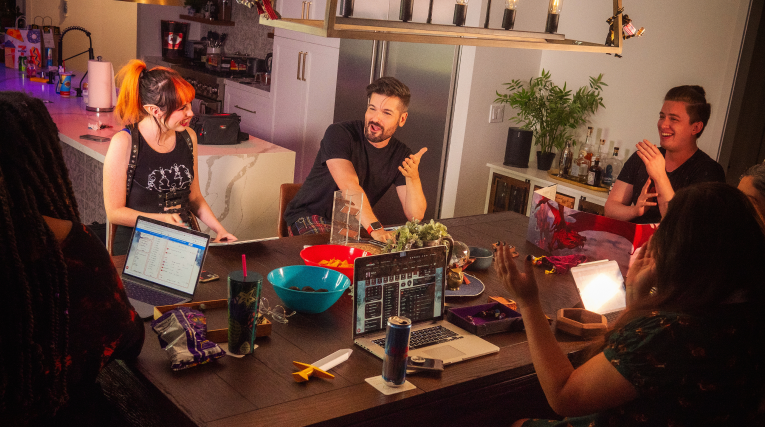
But tabletop taps into a different kind of togetherness. It’s quieter. Slower. There’s no stage and no audience. Nobody is performing for anyone else.
A club night can feel like a release. A tabletop night can feel like a long conversation. Both are real forms of connection. They just meet different needs.
Conventions have their own kind of magic too. Big energy. Discovery. Being surrounded by people who love the same things. But a home game hits differently. It’s smaller and more personal. Over time, inside jokes form. Characters become shorthand. The game becomes a shared history, not just an activity.
Performance Without an Audience
In a way, tabletop is still a kind of performance. Just a very different one. You’re stepping into a role and making choices as someone who isn’t you. But you get to perform without being judged as yourself.
You’re seen as a character, not as a person being evaluated. You can take risks, be dramatic, be ridiculous, or be vulnerable in ways that might feel harder in real life. It’s performance without an audience. Expression without critique. That kind of space is incredibly freeing.
Lately, I’ve been noticing how much I need spaces like that. Not loud. Not constantly reacting. Just places where I can be present with other people and let something unfold without pressure.
A tabletop session gives me that. For a few hours, everything else fades into the background. What’s left is a table, a few friends, and a shared focus that feels grounding.
Why It Still Matters
This isn’t a call to abandon screens, stop going to shows, or trade one kind of culture for another. It’s just a reminder that there are still ways to gather that don’t revolve around feeds or performance.
Ways to sit across from other people and make something together.
If you’ve ever felt curious about tabletop roleplaying games, or if you played years ago and drifted away, maybe it’s worth giving it another look. Not for the rules or the stats, but for the shared experience.
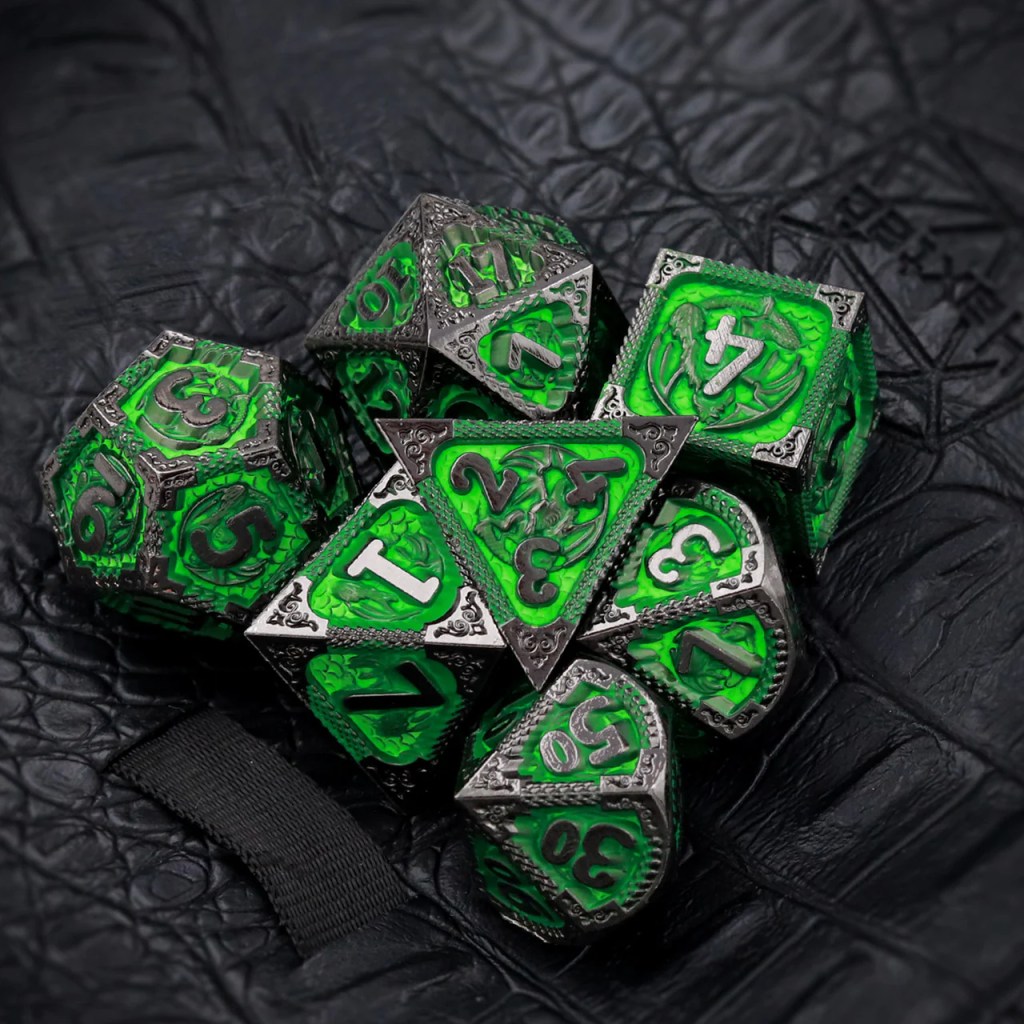
For me, that experience has been a table, a handful of dice, and a group of people willing to disappear into a story together for a while.
Maybe for you, it looks a little different. Either way, the connection is the point.
If you’ve been feeling that pull toward something more hands-on and human, I’d love to hear what that looks like for you. Whether it’s tabletop RPGs, board games, music nights, movie marathons, or something else entirely, drop a comment and share how you’ve been finding real connection lately.
 thetwilighttone.com