
What Stranger Things lost by taking too long to say goodbye
When Recognition Felt Personal
When Stranger Things first premiered in 2016, it didn’t feel like a clever remix of the 1980s. It was familiar in a way that was almost unsettling. Being only a few years younger than the kids in the first season, I was close enough to their age in 1983 that their world wasn’t something I had to decode or imagine. I lived a version of it. I was a latchkey kid with a single mom, disappearing on my bike for hours, coming home when the streetlights said so, filling long stretches of quiet—alone or with friends—with our imaginations because there wasn’t much else competing for it. Maybe Atari or toys, but cable was still a novelty not every home had. There were no streaming services, no internet access, and certainly no smartphones.
I also had an older relative who acted as my cultural gateway, someone tuned into alternative music, pop culture, and stranger sounds long before I understood why they spoke to me. That sense of discovery, of feeling slightly out of sync with the mainstream but not yet alienated by it, is baked into the DNA of the show. Even its use of fantasy rang true. I didn’t fully grasp the rules of playing Dungeons & Dragons at the time, but I understood its spirit immediately: storytelling as refuge, friendship as a structure, and imagination as survival.
Layered over all of this was the media landscape that shaped my sense of wonder and fear. Spielberg’s balance of awe and danger in films like Poltergeist, E.T., and The Goonies. Stephen King stories like Firestarter. John Carpenter’s colder, more existential horror in films like The Thing. The series didn’t just reference these influences. It recombined their DNA into something that felt less like homage and more like shared memory. That’s why the show mattered so deeply to outsiders like me, and why its ending now carries a particular kind of emotional weight.
The 1980s as Emotional Geography
What the show understood early on is that the 1980s weren’t compelling because of fashion or references (even though I still maintain the ’80s were pretty rad because of those things), but because of how the decade felt to live inside. The world was smaller in reach but larger in possibility. Boredom wasn’t a problem to solve; it was raw material to dream and explore. You found your people through proximity and shared obsession, not algorithms or curated identities. Music, film, television, and books arrived slowly and stayed with you because they felt discovered rather than delivered.
The horror of the show was grounded in those rhythms. Bikes, basements, walkie-talkies, and half-understood games weren’t aesthetic choices so much as emotional infrastructure we actually had. Fantasy bled into reality because imagination was how kids processed fear, grief, and difference. The Upside Down worked not just as a monster world, but as a metaphor for existing slightly out of phase with everyone else.

When Nostalgia Became the Point
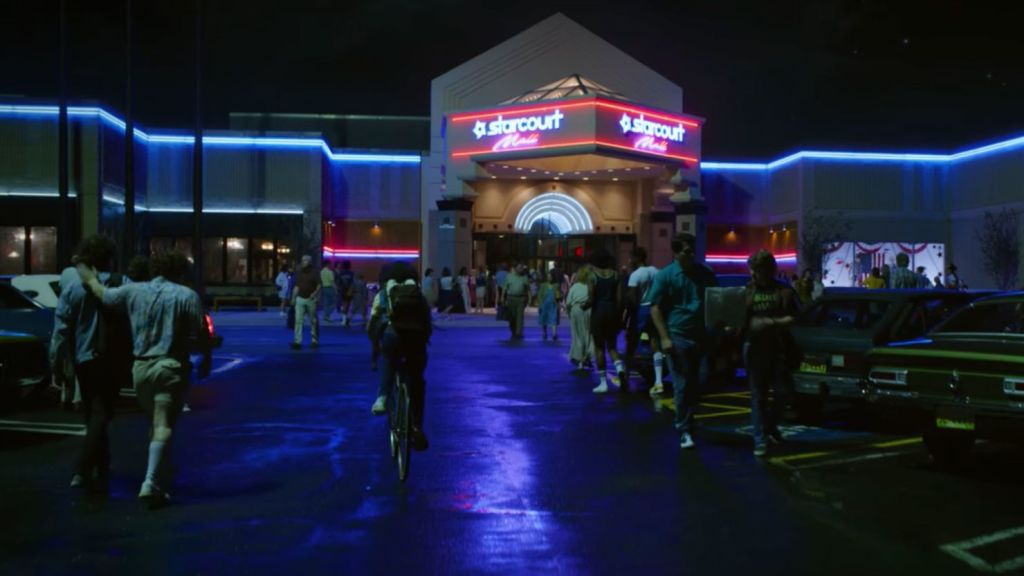
That balance began to shift noticeably in Season 3. The introduction of mall culture and the Russian subplot marked a turning point where nostalgia stopped functioning as texture and started becoming the entire point of the show. The setting grew hyper-saturated with product placement, the references piled up, and the world no longer felt like a place that could exist in any real suburban town. It felt staged, designed to be recognized rather than inhabited.
The Russian storyline pushed this further. Earlier seasons thrived on small-scale menace and secrecy. Here, Cold War paranoia was inflated into something loud and overtly outlandish. The danger became bigger, clearer, and paradoxically less unsettling. What once felt like “this could happen here” gave way to spectacle that felt increasingly safe.
Deferred Stakes and Manufactured Escalation
By the time the series reached its fourth season, that safety was impossible to ignore. The Vecna arc, while visually striking and thematically aligned with the show’s roots, felt less like escalation than postponement. Its core ideas of trauma, memory, and psychic invasion could have emerged naturally in Season 3. Instead, they were stretched and repositioned as a late-stage revelation.
That sense of postponement isn’t just thematic; it reflects how the final season came together. Reports that scripts were still being written while episodes were actively filming point to a series feeling its way toward an ending rather than committing to one from the outset. That uncertainty bleeds into the narrative itself. Rather than building toward inevitability, the story advances by accumulation, reinforcing the impression of a show that knew it needed to end but hesitated to decide how boldly it was willing to do so.
The result wasn’t higher stakes, but deferred ones. Danger lingered just long enough to feel threatening, then receded without leaving marks proportionate to its presentation. The show appeared more ominous than ever, yet less willing to follow through.
Horror Without Consequence
This is where consequence drains out. Characters endure experiences that should fundamentally alter them, yet the narrative repeatedly resets their emotional state to preserve momentum. Trauma is acknowledged and articulated, but rarely allowed to reshape relationships or choices in lasting ways. And while character growth is implied, it’s never fully demonstrated.
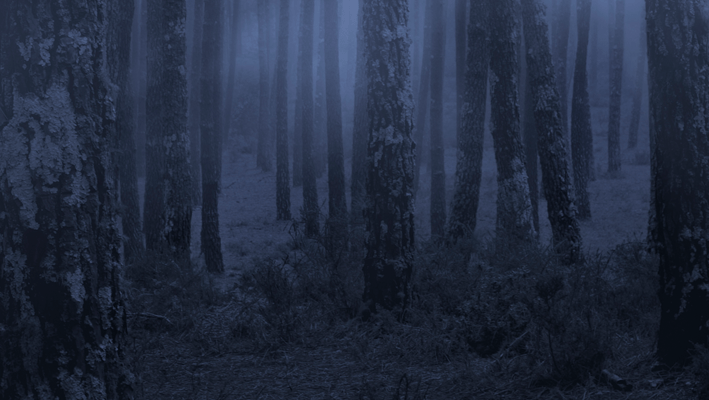
While horror still performs on schedule, it no longer lingers. Instead of dread, the audience is given endurance. The question stops being what might change or what might be lost, and becomes simply how long the show can sustain the illusion of danger.
Characters Preserved, Not Changed
That reluctance to allow consequence carries directly into character development. Once a series commits to preserving its emotional equilibrium, change becomes a liability. Familiarity takes precedence over evolution, and characters begin to orbit the versions of themselves the audience already recognizes.
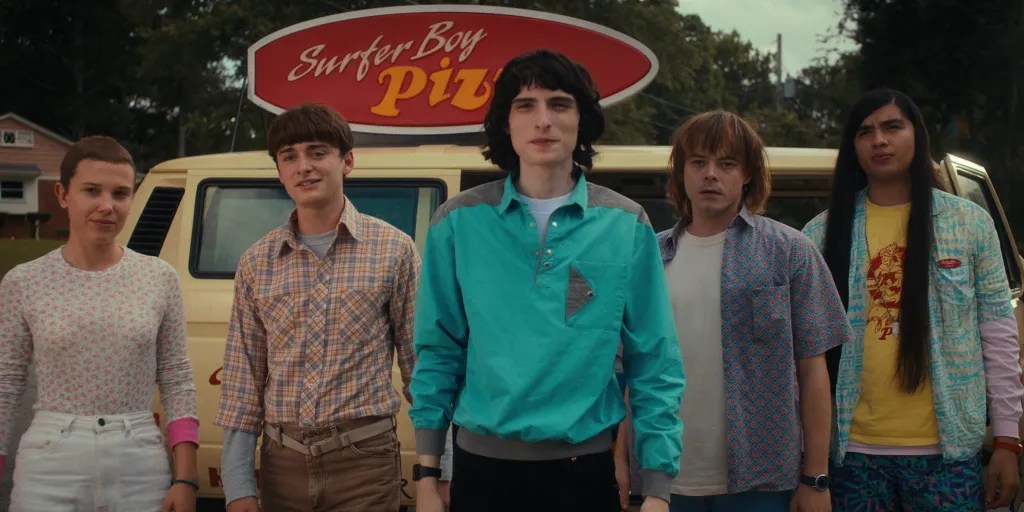
Will is one of the few characters the series ultimately allows real growth. His coming out in the penultimate episode sent visible shockwaves through social media, with some viewers arguing it was shoehorned in too late to feel earned. I didn’t read it that way. Will’s queerness had been quietly coded, suspected, and emotionally legible for years. The moment itself wasn’t a reversal so much as a confirmation, one that aligned with the character’s long-standing sense of isolation and difference.
Where the show falters is in what follows. Will’s family and friend group respond with immediate, near-universal support, and the moment is quickly compacted into emotional closure. There is no fallout, no friction, no sustained tension. While that outcome is comforting, it also feels historically sanitized. The 1980s were not a gentle or forgiving time to come out, particularly for a young boy in a small Midwestern town. Homophobia was not abstract; it was cultural, institutional, and often cruel. Whether the show’s version reflects reality is debatable, but it clearly reflects the series’ growing preference for reassurance over discomfort.
Dustin also experiences genuine growth, though of a different kind. He matures socially and emotionally, moving from awkward outsider to class valedictorian, while processing the loss of Eddie and deepening his bond with Steve. That arc works because it’s relational rather than disruptive. Dustin changes, but the world around him does not need to change in response. Like Will’s story, his development succeeds precisely because it doesn’t threaten the broader emotional balance the show is intent on preserving.
The contrast becomes stark when placed beside Eleven’s trajectory. Where Will is allowed to name something new about himself and Dustin is permitted to grow into confidence and responsibility, Eleven is repeatedly pulled backward. By the end of the series, she feels less like a character shaped by experience and more like a function the story needs to operate. Rather than deepening her interior life, the narrative reverts her toward an earlier version of herself, closer to Season 2 than to the cumulative weight of everything she has endured.
This regression is compounded by performance. Millie Bobby Brown, once the emotional anchor of the series, delivers a noticeably flattened turn in the final season. Emotional beats that once carried vulnerability and ferocity now land hollow. Instead of rooting for Eleven’s growth or survival, it becomes disturbingly easy to imagine the story functioning more cleanly if it allowed her to exit entirely. That reaction isn’t cruelty. It’s narrative exhaustion.
The issue becomes even clearer with late-stage additions like the increased focus on Holly Wheeler. Vecna’s victims have consistently been defined by isolation and insecurity, yet Holly has never been established that way. She has largely existed as a background presence in prior seasons, and the performance does not align with the vulnerability the narrative suddenly requires. Time spent retrofitting her into emotional significance only further crowds an ensemble already struggling to give its existing characters meaningful space.
Time itself exacerbates these issues. The show took nearly a decade to tell a story ostensibly about a few formative teenage years. Characters introduced around age eleven are still framed as sixteen or seventeen, while the actors portraying them are now in their early twenties and fully public figures. That gap matters. The audience isn’t just being asked to suspend narrative disbelief, but cultural awareness. We know these performers as adults, brands, and celebrities, and that knowledge erodes the illusion of vulnerability the story depends on.
The pattern is difficult to ignore. Will is allowed to grow, but only in a way that is quickly absorbed and smoothed over. Dustin matures without disrupting the world around him. Eleven, the supposed emotional center of the series, is denied meaningful evolution altogether. In a show ostensibly about kids growing up, these choices point to the same underlying fear: letting change linger might alter the emotional equilibrium the series is no longer willing to risk.
An Ending Designed to Reassure
The ending that follows isn’t disastrous. It’s careful, competent, and clearly made with affection. But it’s also safe in a way that feels misaligned with what once made the series resonate so deeply. Instead of leaving us unsettled, we’re left reassured.
It’s also impossible to separate this ending from the world it’s arriving in. Stranger Things premiered in 2016, before a pandemic, before streaming saturation, before nostalgia fully calcified into a business model. At the time, retreating into a version of childhood felt grounding. Nearly a decade later, the cultural mood is different. Audiences are more wary of comfort that asks nothing of them, and more aware of when reassurance is being offered in place of resolution. In that context, the show’s careful, risk-averse ending feels safe and dated.
That choice makes sense from a legacy standpoint. It’s harder to close something that became a cultural anchor without smoothing its edges. But reassurance comes at a cost. What’s lost isn’t quality, but tension, and the feeling that something fragile was truly at stake.
Letting Go of a Shared Memory
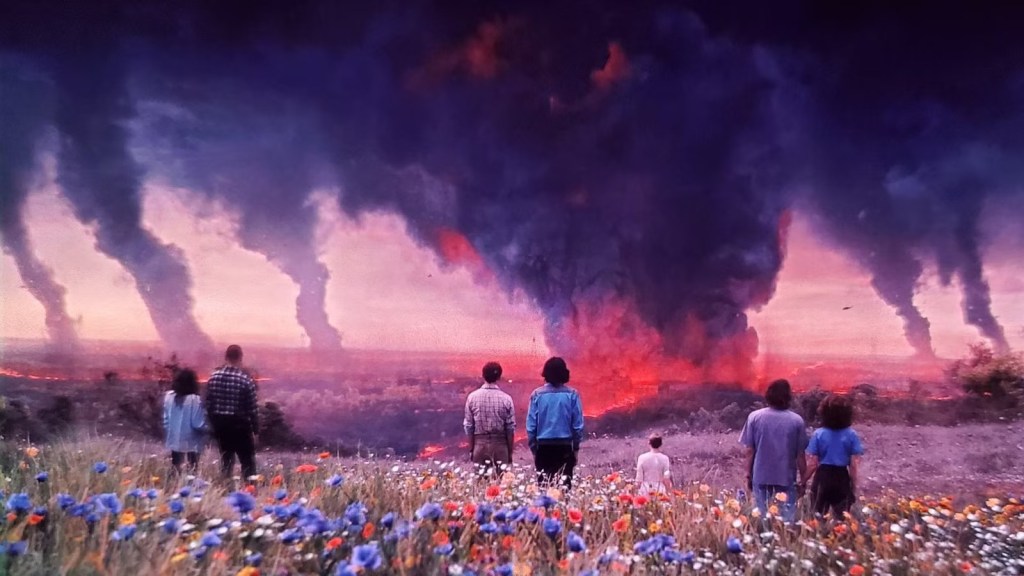
For outsiders, this moment is familiar. Things that once felt like refuge don’t always get to remain so. This isn’t a rejection of Stranger Things, just an acknowledgment of how it outgrew the conditions that made it feel essential.
What remains isn’t the spectacle or the brand. We are left with the memory of when the story felt close enough to touch. When it trusted quiet. When fear lingered. When difference didn’t need to be explained away.
That’s enough. It has to be.
Editor’s Note
The visual identity of The Twilight Tone was shaped from the start by a blend of 1980s genre mood and the early aesthetic of Stranger Things. The neon glow, synth-forward melancholy, and sense of unease that define the site, including the banner imagery, owe a clear debt to the show’s first season. This was a founding influence, not an affectation. The reflection above comes from a place of appreciation and connection, looking back at a series that mattered deeply and helped define the cultural atmosphere this publication continues to explore.
Comment Policy
This piece reflects a personal, critical reading of Stranger Things from someone who lived close to the era the show depicts and followed it from its debut. Disagreement is welcome. Thoughtful discussion is encouraged. Dismissive takes, bad-faith arguments, or culture-war framing will be ignored or removed. If you want to engage, engage with the ideas on the page.
🔎 Media Credits & Series Info
Title: Stranger Things (Seasons 1–5)
Creators: Matt Duffer, Ross Duffer
Executive Producers: Matt Duffer, Ross Duffer, Shawn Levy
Primary Cast: Millie Bobby Brown, Finn Wolfhard, Noah Schnapp, Gaten Matarazzo, Caleb McLaughlin, Winona Ryder, David Harbour, Sadie Sink, Natalia Dyer, Charlie Heaton, Joe Keery, Maya Hawke
Studio: Netflix
Genre: Science Fiction, Horror, Coming-of-Age Drama
📷 Image Sources & Usage
All images are used under fair use for editorial and critical purposes.
© Netflix.
Series stills and promotional imagery sourced from official press materials and publicly available media assets. Images are presented in a transformed, contextual manner to support criticism, commentary, and cultural analysis.
 thetwilighttone.com